Severus Snape
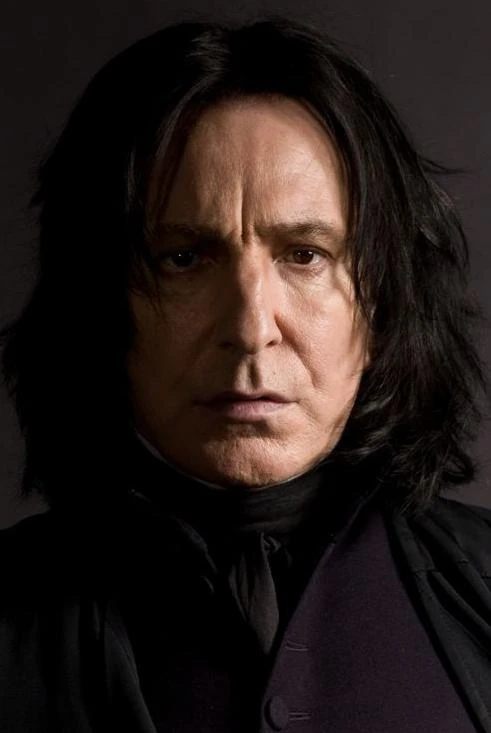
Origin: Harry Potter
Hair:
Eyes:
Species: Human
Birthday:
Parents: Eileen Prince, Tobias Snape (not imported)
Residence: Mage Tower 6-1-5
Occupation: Potioneer
Affiliation:
Talent: Magic
Medical notes:
Sports/Instruments:
Languages:
Import Date: 5 (+)
Professor Severus Snape (9 January 1960[1] – 2 May 1998)[2] was an English half-blood[3] wizard serving as Potions Master (1981-1996), Head of Slytherin House (1981-1997), Defence Against the Dark Arts professor (1996-1997), and Headmaster (1997-1998) of the Hogwarts School of Witchcraft and Wizardry as well as a member of the Order of the Phoenix and a Death Eater. His double life played an extremely important role in both of the Wizarding Wars against Voldemort.
The only child of Muggle Tobias Snape and witch Eileen Snape (née Prince), Severus was raised in the Muggle dwelling of Spinner's End, which was in close proximity to the home of the Evans family, though in a poorer area. He met Lily and Petunia Evans when he was nine. He fell deeply in love with Lily upon their meeting and became a close friend of hers.[7]
Severus started at Hogwarts with Lily in 1971, where he was sorted into Slytherin House. This put him in the same year as Lily but unfortunately for him she was sorted into Gryffindor House. Severus became the immediate enemy of James Potter and Sirius Black and was a frequent victim of their bullying. This led him to be irritable towards James's son Harry when he was a professor. Snape, when young, developed a passion for the Dark Arts, which increased as his desire for revenge against his bullies grew stronger.
Snape became involved with the bullies in Slytherin House, many of whom were pure-blood supremacists. This put his friendship with Lily, a Muggle-born, under great strain until it was eventually broken in their fifth year.[6][7] In a misguided attempt to win back Lily's affections,[18] Snape joined the Death Eaters along with a group of his fellow Slytherins.
Severus was made a member of the Slug Club presumably because of his talent in Potion-making. Horace Slughorn even kept a picture of him as a student, clutching his copy of Advanced Potion-Making. However, Horace did not actually have many hopes for Severus's future, as his photograph was kept behind many others.[19]
As an active Death Eater, one of Snape's biggest contributions was letting Lord Voldemort know about the prophecy Sybill Trelawney made to Dumbledore. This part of the prophecy could have applied to either Harry Potter or Neville Longbottom, who was also born at the end of July 1980 to parents who were members of the Order. Once Lord Voldemort decided to target the Potters over the Longbottoms, Snape begged Voldemort to at least spare Lily. Voldemort agreed, then did not follow through on this promise.
Shortly before Lily Evans was murdered by Lord Voldemort, Snape changed sides and became a member of the Order of the Phoenix as well as a double agent during the Second Wizarding War. With tremendous difficulty, Snape prevented Lord Voldemort from learning the truth about his loyalties.
Despite the opinions of most others including Harry during his early life, Albus Dumbledore trusted Snape for reasons that were kept between them both until their deaths. Despite Snape killing Dumbledore, it is learned that they had a special agreement for him to do so. When he died, it was revealed that his deep strong love for Lily Evans caused him to redeem himself, joining Dumbledore's cause for her protection (and, after her death, that of her son) from Lord Voldemort.[7]
The relationship between Dumbledore and Snape would be one of unusually strong loyalty, so much so that Snape agreed to kill Dumbledore upon the latter's own request. Before Dumbledore's death, Snape promised to protect the students of Hogwarts from the Death Eaters, who would inevitably take control of the Ministry of Magic as well as the school.[7]
Snape later participated in the Battle of Hogwarts but was murdered by Lord Voldemort who mistakenly believed that Snape was the master of the Elder Wand (an immensely strong and powerful wand that Voldemort deeply desired, as well as one of the Deathly Hallows)[20] when in reality, Harry Potter was the master of the Elder Wand, because Draco Malfoy had disarmed Dumbledore on the night of Dumbledore's death on top of the Astronomy Tower, and Harry had disarmed Draco at Malfoy Manor.[21]
After Snape's death, Harry Potter ensured that his portrait remained at Hogwarts, honouring him as a hero, despite their significant personal differences.[21] In addition, Harry later named his second son Albus Severus Potter in honour of Dumbledore and Severus, both of whom were an inspiration in Harry's life after the Battle of Hogwarts. Harry also was influenced by Severus' Hogwarts house, and freely admitted that his son Albus could choose Slytherin if he wished.[22]
Physical appearance
Severus Snape was a thin man with sallow skin, a large, hooked nose and yellow, uneven teeth. He usually dressed in flowing black robes which made him resemble "an overgrown bat". He had shoulder-length, greasy black hair which framed his face in curtains, curling lips and dark, penetrating eyes that resembled tunnels. As a Death Eater, he bore the Dark Mark on his left inner forearm.
The younger Snape had a "stringy, pallid look", being "round-shouldered yet angular" and with a "twitchy walk that recalled a spider", as well as "long oily hair that jumped about his face".
Snape had a strong, authoritative presence. He spoke in a soft, contained voice most of the time, except during the occasional instances when he lost his temper.
Personality and traits
A complicated, withdrawn person, Severus Snape's life was overwhelmed with many complex emotions that he never fully disclosed. At times, Snape could appear cold, cynical, malicious, bitter, and sarcastic. He had a commanding presence that exuded gravitas, authority, and control; like Professor McGonagall, he had the ability to keep a class quiet without effort. He tended to hold grudges and was extremely spiteful toward those whom he disliked. In particular, he disdained Gryffindor students, considering them to be arrogant and attention-seeking. Descriptions of his social interactions as a child suggest that he had poor interpersonal skills and that he may have suffered from depression.
Snape was a repressed, solitary man with no friends. In his early life, he was insecure, vulnerable, and yearned to be part of something better. As a child, the bleak normality of working-class suburbia compounded with his neglectful Muggle father inspired in him a contempt for ordinariness. This urgent desire to be a part of something powerful and important was what drew him to Lord Voldemort's inner circle. Snape's bitterness and resentment towards the world was exacerbated even more by the relentless bullying he endured in school, causing him to shut himself in even more.
Snape was not a prejudiced individual despite the Death Eater beliefs of pure-blood superiority, but he was rather against Muggles, presumably because of his sour experience with both his father and Petunia Evans, but he held no ill-will towards Muggle-borns. The foundation of him scolding Lily Evans by calling her Mudblood was to not appear weak in front of his fellow Death Eater students than actual supremacist views. He also deeply regretted this, as it was what ended his friendship with Lily and defended Hermione Granger when Phineas Nigellus Black called her Mudblood, his manner of speaking in this instance being uncharacteristically explosive and filled with more emotion than he normally displayed.
He was an intensely private individual who viewed emotional displays as a sign of shameful weakness. As an Occlumens, Snape had superb emotional control and was adept at concealing his thoughts and feelings, which allowed him to maintain his cold, collected demeanour. However, he had his limits, and was not incapable of losing his temper, particularly when it came to dealing with Harry Potter. Inevitably, he also became furious when he thought he was being pitied or accused of cowardice.
Snape was a formidable sorcerer, displaying consummate skill in many different branches of magic. His extensive knowledge and abilities were rivalled by very few, if any other witches and wizards of his age. Snape was also unusually cerebral for a wizard, possessing a subtle and keenly analytical mind. As a result, Snape was extremely intelligent and calculative, with a mind for strategy and deduction. He was also a profound misanthrope who appeared to have a prominent hatred of almost every child under his tutelage, except of course for Slytherins. He valued logic and cunning above magical power.
As a professor, Snape was known for his cavalier and harshly authoritarian attitude towards his teaching. His standards for his classes were much higher than that of the other professors, as he only allowed students with the very best grades to continue into advanced study. As Potions Master, he described it as an art and an exact science, and he dismissed the use of incantations and wand waving as "silly and foolish". He developed a loving passion for Dark Arts, originally in the hopes to cover the shame of his heritage, and his interest in it led him to repeatedly apply for the Defence Against the Dark Arts professor post every year despite being rejected for sixteen years.
Snape knew full well why Dumbledore never granted him the position, as it may be a trigger to bring out his worst side, something he denied to Umbridge's questioning but let in to those of Bellatrix's. When he finally got his wish, Snape taught the course with a loving caress in his voice, far beyond simply respecting the Dark Arts as a dangerous foe, something he did not show in his post as the Potions Master. He also taught this class slightly fairer than he did in Potions, such as lowering his entrance standards and biases for N.E.W.T. level classes, allowing more students to enter the advanced studies of his favourite class, and placed students from his own house, such as Vincent Crabbe and Gregory Goyle, in detention for failing to do acceptable work the second time around after failing their O.W.L. the previous year.
Ultimately, it was Snape's past and his love for Lily Evans that defined his inner being. His love for Lily Evans became most noticeable by his Patronus; a Doe, just like Lily's. Upon overhearing the Prophecy, he immediately informed his then-master of its contents, unaware that this would endanger Lily and her family. It was only after Lily's death that Snape realised the full extent of his actions. He suffered terrible remorse for what he had done and spent the rest of his life in constant danger in order to protect Lily's son.
In spite of his vindictive demeanour, Severus Snape was an immensely brave man who possessed a deep capacity for love. Everything that he did in the latter part of his life was motivated by his devotion to Lily Evans, whom he loved unconditionally. He was one of Dumbledore's most reliable allies and, in his role as a double agent, took great personal risk in ensuring Harry's safety from Lord Voldemort. Despite his years of him and Harry barely getting along, if at all, Snape openly criticised Dumbledore after learning he protected Harry all these years just so he could die at the right time due to being a Horcrux, showing he didn't agree with Harry's death even though, at first, he only protected him because of his relationship to Lily. When he informed Dumbledore that he informed Voldemort of the prophecy, Snape begged Dumbledore to hide Harry, Lily, and even James too. This clearly showed that Snape prioritised Lily's happiness above all else, even if it meant her being with a man he hated for most of his life.
Despite his coldness towards all but Lily, Snape nevertheless proved capable of genuinely caring for others apart from Lily and Harry. He showed that despite his mistreatment of them, he cared considerably for the students of Hogwarts, risking his façade for them by secretly doing everything he can to make sure they stayed out of harm's way and at one point being genuinely concerned when a student was taken to the Chamber of Secrets. Additionally, Snape was also genuinely saddened by the death of Rowan Khanna, his face just as mournful as the rest of the other House Heads, and if Rowan were in Slytherin, Snape even went as far as to plead with Merula to stop being angry and comfort them with the prospect of standing together in the face of crisis.
While he initially resented Dumbledore for his lack of intervention on his torturous bullying by the Marauders, it seemed the time he spent allying with Dumbledore had made him grow to genuinely as well as greatly respect and even care for him, as shown by how he was clearly shocked into being silent for a long time after Dumbledore asked Snape to kill him, clearly indicated that killing Dumbledore was hard for him to do and tried to make him have Draco kill him instead of having Snape do it. Even after learning of how Dumbledore had wanted Harry to die so Voldemort can be defeated, when preparing to kill Dumbledore, his face was described as being genuinely hateful and disgusted of what he was about to do.
Despite Snape's normally calm and controlled exterior and guarded body language, he was in possession of an extraordinarily explosive and almost psychotic temper. This was rarely seen, but an extreme display of rage was most prominently witnessed after Snape killed Dumbledore and was confronted outside of Hagrid's burning house near the edge of the school grounds. The event that triggered this unhinged manifestation of Snape's unrestrained wrath was Harry's accusation of Snape being a coward for killing Dumbledore.
Due to the many years of being bullied by Harry's father and with a need to both vent his immense stress and maintain his cover as a loyal Death Eater, Snape unleashed a terrifying mix of both his emotions and magic in his duel with Harry, taking great pleasure in torturing and punishing the son of his enemy. Unlike in the past where he spoke quietly in his anger, Snape in this instance was screaming and letting so much out as well as confessing his identity of the Half-Blood Prince to Harry, who had attempted to use one of Snape's own invented spells against him. This battle showed Snape's repressed rage in its horrific glory and power. Suffice it to say, Severus Snape was not a man who it was wise to provoke, lest one incur his almost elemental wrath and magical power.
Magical abilities and skills
Severus Snape was an extremely powerful and skilled wizard, showing proficient talent and great knowledge in many different areas of magic. He had an encyclopaedic knowledge and proficiency in potions, was incredibly talented in Legilimency and Occlumency, and was also the only Death Eater capable of producing a Patronus.
Magical mastery: Even at a young age, Severus was a gifted wizard, having knowledge of deep secrets of the wizarding world that he would usually relay to his crush, Lily Potter. In addition, Sirius Black, a known rival of his, claimed that Severus knew more about the Dark Arts than half of the seventh years at Hogwarts, which speaks for his seemingly encyclopaedic knowledge of magic. He was proficient in creating many useful spells used by the Death Eaters and even his rivals. He was also proficient in altering the formula for potions, resulting in an easier and more efficient way to produce them, which enhanced Harry Potter's proficiency in Potions to the point of easily surpassing even the results of Hermione Granger. His magical prowess was so great as a teenager that his bully and rival, James Potter would never have taken him on in a one on one fight unless he was backed up by his three other talented friends. As an adult, Snape had became an incredibly powerful and skilled wizard and acknowledged by his fellow professors and Lord Voldemort for his great prowess. He proved capable of effortlessly defeating the likes of Harry Potter and also holding his own against the extremely powerful witch Minerva McGonagall, who was capable of surviving a duel with Voldemort himself.
Love: Severus was one of the only people in Voldemort's inner circle who was capable of feeling unconditional love. He fell deeply in love with Lily Evans as a child and maintained his devotion to her until his death. Despite their differences in beliefs about many things, Severus felt nothing but absolute love for Lily even though she never extended her reciprocity beyond friendship. Snape was devastated by Lily's death and expressed suicidal desires. However, so great was his love, he forced his way past them and spent seventeen years in constant danger in order to protect Lily's son and ensure that her sacrifice was not in vain. Indeed, Snape's Patronus was a doe, just like Lily's, showing that his love for her was far stronger than his loyalty to Lord Voldemort. Due to this, Snape was the only Death Eater who was able to cast a Patronus. Furthermore, his insight into the nature of love was evident when teaching Love Potions, as he was able to distinguish between the obsessive love caused by love potions and the genuine, unconditional love that most people felt for each other.[101]
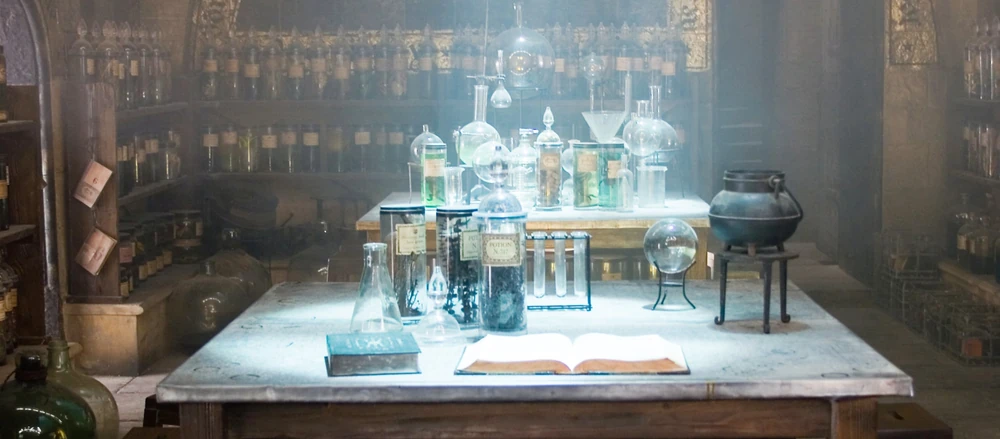
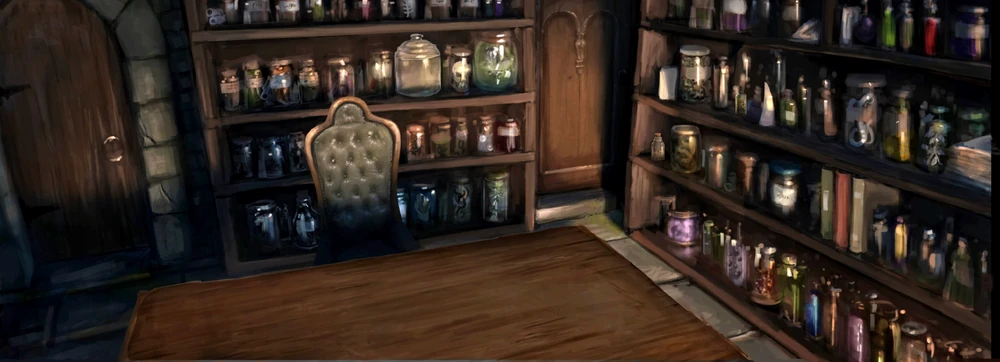
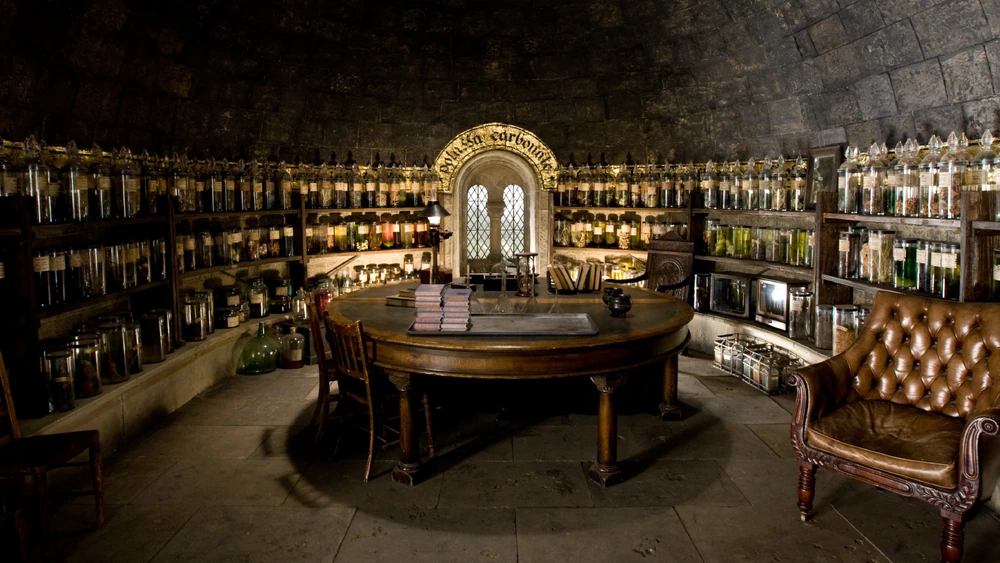
Potions: Severus was extremely adept in the art of potion-making and worked as the Potions Master at Hogwarts for about fifteen years. His prowess at potion-making extended beyond simple execution from formally documented recipes accepted and followed by the general public. When he was still only a student, he would alter official instructions with his own variations, which usually resulted in quicker and more efficient results. He was capable of brewing highly complicated potions such as Veritaserum, Wolfsbane Potion, and the Mandrake Restorative Draught. In 1996, Professor Slughorn mentioned that in all his years of teaching, only one student had ever managed to brew an acceptable Draught of Living Death and claim the Felix Felicis being offered as a prize. It is implied, though not confirmed, that Snape was this student. Snape was also able to identify Polyjuice Potion by smell and produce fake Veritaserum that seemed real enough to fool Dolores Umbridge (though Umbridge was not portrayed as being particularly intelligent with practicality). In addition, Snape used an unidentified golden potion to help slow a curse that was slowly killing Dumbledore.
Dark Arts: Severus had a passion for the Dark Arts from a young age, and he was especially talented with curses, or so some believed. According to Sirius Black, Snape was "up to his eyeballs in the Dark Arts" when he was at school. However, they had an age-old rivalry which could have influenced Sirius's words. When he was still a student, Snape was already talented enough that he was capable of creating new dark spells, as most of the spells he created were curses, hexes, and jinxes. As an adult at least, Snape was capable of performing the Killing Curse, one of the Unforgivable Curses that required a considerable level of magical skill, using the curse to kill Dumbledore on his orders.
Defence Against the Dark Arts: Though Snape had a zest for dark magic, he possessed outstanding knowledge and abilities in protecting from it. His encyclopaedic understanding of the dark arts may have contributed to this. Snape taught the class at N.E.W.T level to such an effect that even Harry Potter could not help but be enchanted by his knowledge. Snape effectively "assisted" the 1992 duelling club and understood the need for students handling pragmatism as well as theory in the subject. Snape's speciality in DADA was particularly in the area of counter-curses. In fact, his abilities in countering curses were so great that he was able to temporarily save Dumbledore (himself an expert on the subject) with wand-enhanced incantations and a potion simultaneously from a "curse of extraordinary power", Dumbledore noted that he was only able to (temporarily) survive due to Snape's expertise. He was also able to prevent the curse that Katie Bell was inflicted with when she touched the necklace on Borgin and Burkes from spreading any further, saving her life. Snape had also developed effective counter-curses for his own dark charms, such as the magic he used to heal Draco from the effects of Sectumsempra.
Occlumency and Legilimency: Snape's unerring ability to conceal his thoughts and feelings from external penetration proved to be crucial for him. His skills in Occlumency were so great that for seventeen years, he managed to hide facts from Lord Voldemort such as his remorse for Lily Evans's death and his secret alliance with Albus Dumbledore; it was his mastery of hiding his mind that made both sides distrust him. Snape was also very skilled at Legilimency; Harry Potter often felt as if Snape had the ability to read minds even before learning what the art was. Snape used Legilimency on Harry constantly while attempting to teach him Occlumency in their private lessons and later used it to effortlessly deflect Harry's spells and curses. Despite his skill in Legilimency, he may have been unable to read Draco Malfoy's thoughts when the latter was a relatively inexperienced Occlumens (though Draco may have only believed that he was able to block Snape). Since Voldemort was considered history's greatest legilimens and was unable to ever read Snape's mind despite being in the same room with him on many occasions, Snape could be history's greatest occlumens, with the possible exception of Albus Dumbledore and Gellert Grindelwald, both of whom proved able to also deflect Voldemort's Legilimency. Considering how Voldemort would have detected Snape resisting penetration, Snape would've had to be careful only to block certain thoughts from him while allowing Voldemort to only see what would reinforce his belief in Snape's loyalty. Indeed, during Harry Potter and Lord Voldemort's final duel, Voldemort was at first dismissive of Harry's claims that Severus Snape betrayed him after he didn't spare Lily's life and how Snape's patronus was the same as Lily's as he had loved Lily since they were children, showing Snape's great skills in Occlumency.
Transfiguration: Severus was highly accomplished with transfiguration, given his proficiency with Conjuration and Vanishment, two very difficult and advanced branches of this field. He was talented with the vanishing of physical matter, as shown when he vanished Harry Potter's failed Draught of Peace potion in 1995 with the Vanishing Spell[102] and when he vanished the snake that Draco Malfoy summoned in 1992 with the Snake-Vanishing Spell.[83] He also successfully conjured ropes with the Incarcerous Spell to bind Sirius Black and Remus Lupin in the Shrieking Shack in 1994.[103] He also transfigured the whirlwind-shaped fire that McGonagall launched at him shortly before the Battle of Hogwarts into a great black snake.[96]
Charms: Snape was highly talented in charms as he not only could use basic to advanced charms without fail, such as levitation, disarming, summoning, banishing, locking doors, repairing, illuminating, igniting, creating water, shielding and stunning, but he was even able to cast the incredibly difficult Patronus Charm, conjuring a corporeal doe Patronus. He was also able to write instructions on a blackboard with a single flick of his wand.
Flying: Snape was a very capable flyer on a broomstick, as during the Battle of the Seven Potters, he was not blasted off his broom, and he was knowledgeable enough in the rules of Quidditch to take over the position of referee at least once. However, in one of Snape's memories, Lily was laughing as he attempted to mount a bucking broomstick, so perhaps he was not always a good flyer. Later on, Severus was also capable of Unsupported flight. The only other known wizard that was able to do this was Lord Voldemort himself (who is likely to have passed down this skill to Snape personally). In 1997, he used this skill to escape from Hogwarts after his duel with Minerva McGonagall.
Teaching skills: Despite his unpleasant nature and strained relationship with many of the Hogwarts students outside Slytherin, Snape was nevertheless a relatively effective teacher as the Potions Master, and he was one of the few teachers at Hogwarts who could keep a class quiet with minimal effort, with some students like Percy Weasley and Hermione Granger able to achieve O.W.L.s and N.E.W.T.s under his teaching, despite Snape only allowing students with top grades to do Potions in the NEWT level. In addition to being the Potions Master at Hogwarts for most of his teaching career, Snape's teaching skills allowed him to eventually become the Defence Against the Dark Arts teacher, the teaching post he sought after the most at Hogwarts. It was also effective enough for him to be respected by most of the other professors until he killed Dumbledore, pass Dolores Umbridge's inspection of him and for Voldemort to make him Headmaster of Hogwarts following the Fall of the Ministry of Magic. Even while he was still the Potions Master, he served as a substitute teacher for Remus Lupin's Defence Against the Dart Arts lessons during Lupin's Werewolf transformations and, prior to that, assisted Gilderoy Lockhart in a duelling demonstration for the short-lived Duelling Club at Hogwarts, and indirectly taught Harry Potter the Disarming Charm during that demonstration, which proved enough for it to become Harry's signature spell. Additionally, while Harry did not learn much from Snape in Potions due to their mutual dislike of each other, the instructions Snape wrote in his copy of Advanced Potion-Making were effective enough to make Harry improve his own Potions aptitude in his sixth year. However, Snape's teaching skills were not flawless, as his unpleasant nature meant that he was not as liked or respected as other professors in the school by most students excluding Slytherin, he demonstrated bias towards Slytherin students over students from other houses and bullied some students like Harry and Neville Longbottom while teaching, resulting in him becoming the latter's worst fear during his earlier years at Hogwarts. He was also unable to effectively teach Harry Occlumency, mostly due to their mutual dislike of each other not allowing him to teach Harry in a more encouraging manner, which most likely would have made Harry focus more in learning Occlumency and control his emotions better. It is possible that Snape would have been more respected as a teacher by other students if he was less unpleasant, if he was less biased towards Slytherin students, and if he incorporated the instructions in his copy of Advanced Potion-Making into his teaching more often.
Leadership skills: Snape had good leadership skills, given that they were sufficient for both Dumbledore and Voldemort (both for different reasons) to consider him suitable to be the next Headmaster of Hogwarts after Dumbledore's death and the Fall of the Ministry of Magic. Despite opposition from the other professors of Hogwarts due to them being ignorant of his true loyalties which resulted in his eventual ousting, Snape was able to carry out his duties as Headmaster for at least a year and managed to secretly protect some students from the Carrows' torturous punishments without revealing his true loyalties to either Voldemort or the other Death Eaters. His leadership skills were also shown during the Battle of the Astronomy Tower as he managed to convince the other Death Eaters present that he was the one who should kill Dumbledore and ordered them all to leave Hogwarts after killing Dumbledore while still hiding his true loyalties.
Acting skills: Snape was an extremely adept actor, as he flawlessly succeeded in hiding his true allegiance to Albus Dumbledore from the Death Eaters, even able to fool Voldemort himself completely to the point of the latter having complete trust in him to such an extent that after he killed Dumbledore, Voldemort was fully willing to make him Hogwarts's Headmaster. Snape's skill in acting allowed him to keep his motives dubious in the eyes of both friend and ally alike. This makes Snape likely the most accomplished actor and spy in wizarding history.
Indomitable willpower: Snape, despite his personal demons, possessed immense willpower and bravery, being a respected hero of the Second Wizarding War and having great respect from both Albus Dumbledore and Harry Potter (the latter of whom would go so far as to declare Snape to be "the bravest man [he] ever knew"). Hence, despite his great love for Lily Potter and being aware of her intense disapproval for the Dark Arts, Snape refused to relinquish his interest for the practice nor abandon the approval of his Slytherin friends for her. Later, while guilt-ridden and devastated, feeling personally responsible for Lily's death, Snape refused to succumb to despair and instead dedicated himself to honouring Lily in death by working closely with Dumbledore to protect Harry and ensure that her sacrifice was not in vain. As such, despite the extremely dangerous and seemingly impossible task of bringing down the most powerful Dark wizard of all time, Lord Voldemort, Snape refused to back down from it and resolved to faithfully execute Dumbledore's many complex and intricate plans to bring down the Dark Lord, with him valiantly working as an undercover agent for the Order of the Phoenix for sixteen years and steadfastly spying on the Death Eaters, with this ultimately ensuring Voldemort's defeat at the hands of Harry. Snape's willpower and determination also allowed him to persistently apply for the Defence Against the Dark Arts post for fifteen years (despite Dumbledore repeatedly refusing him the job) and to completely master the notably difficult skills of Occlumency and non-verbal magic, both of which required high amounts of mental strength. Moreover, in an alternate timeline, Snape was willing to sacrifice himself to defeat Voldemort and save the world once again by distracting a swarm of Dementors, thereby giving Scorpius Malfoy the necessary opening to restore the timeline again.
Duelling: Although he rarely engaged in duels, Snape was shown to be a highly capable duellist. During his days as a Death Eater, he likely had to fight against aurors and members of the Order of the Phoenix. He was able to hold his own against the extremely powerful Minerva McGonagall (who was capable of duelling Voldemort along with Kingsley and Slughorn) during their brief duel, before she forced him to hide behind a shield of armour. He then fled when Pomona Sprout and Filius Flitwick arrived to assist. He assisted in a duelling club in 1992 with Gilderoy Lockhart, effortlessly defeating him with a single spell, though, as Lockhart was an unskilled wizard, this was not such a great achievement. Snape also easily overwhelmed Harry Potter during his escape from the Battle of the Astronomy Tower and defeated him without much effort, using Legilimency to read Harry's attempted moves and countering them all before they could be cast. Severus participated in the Battle of the Seven Potters, joining the Death Eaters' side (though secretly attempted to protect the Order), and survived unharmed. Contrary to the vicious duelling styles of other Death Eaters, Snape preferred using defensive spells and only used aggressive magic when facing a weak opponent, such as Lockhart, or when his foe grew frustrated and started making mistakes. Snape was never known to battle a Death Eater or ally to Voldemort (which would've blown his cover), but no Death Eater ever dared raise a wand against him (even the notoriously powerful Bellatrix Lestrange) and showed fear towards him, indicating they must have seen him display remarkable duelling skills.
Spell creation: As a student at Hogwarts, Severus was very inventive with new spells. Some of the spells he created were Sectumsempra, Langlock, Muffliato, Levicorpus and its counter-jinx Liberacorpus.[27] The last two somehow became common knowledge around the school. It is unknown what thoughts and techniques Snape put into his creations.
Wandless and nonverbal magic: Snape was highly skilled at using non-verbal spells, from the most basic uses (such as instruction-writing on blackboards and cleanups) to the most advanced (such as combat curses). Snape was also skilled at performing wandless magic, such as rope conjuring, counter-jinxing, and memory extraction. (Although memory extraction does not require explicitly the use of a wand, relying instead on direct eye contact, conjuring and counter-jinxing are more often depicted to take place with the help of a wand.)
Healing magic: Snape was also very skilled with healing magic, as he reduced the effects of the Curse on Marvolo Gaunt's ring on Albus Dumbledore, which allowed him to survive for at least a year, and saved Katie Bell's life by preventing any further spread of the cursed necklace in her body.[7] He also healed Draco Malfoy's wounds with Vulnera Sanentur, a healing spell and counter-curse, after Harry Potter recklessly used the Sectumsempra curse on him and seriously injured him.[33] His knowledge in healing was such that Dumbledore once quoted to Harry that Snape was more experienced in healing against Dark magic than Poppy Pomfrey was. He also successfully brewed the Mandrake Restorative Draught in the 1992–1993 school year, which cured all the victims of petrification that year.[86]
Apparition: Like most accomplished adult wizards, Snape could apparate successfully at will. He disapparated away from Hogwarts after the Battle of the Astronomy Tower in 1997 from beyond the Hogwarts gates.[27]
Intellectual giftedness: Snape's logic and deductive reasoning skills were such that he helped protect the Philosopher's Stone by creating an obstacle, which was based on logic rather than magical skill. According to Hermione Granger, many powerful wizards have a blind spot in regards to logic.[75]
Poetry: A skill that Snape possessed but did not make very much mention or display of, Snape was capable of fluidly crafting his words in a way that could often befuddle the reader. His only known composition was the logic puzzle that he used as part of his defences of the Philosopher's Stone. Since this poem showed Snape's logical thinking, it was obviously one of his own creations. Snape's other possible works, if they exist, remain unknown.
Alchemy: Intimately connected with Potion-making among other things, Snape had great respect for the field of alchemy, believing it was as much about gaining intellectual wealth as the physical one. Deeming it more advanced than his usual lessons to the point where he initially asked Jacob's sibling if the latter was joking when they asked whether he would be willing to teach alchemy to themselves and the visiting Beauxbatons student, insisting that he would only ever consider giving lessons on the subject to a select few of his very best students, such as Penny Haywood. Displaying a fair amount of knowledge on the topic, he was able to host a private lesson and give Jacob's sibling, Penny Haywood, and Aurélie Dumont a lecture on the philosophy, history, and teachings of the subject as well as its objectives.[104]